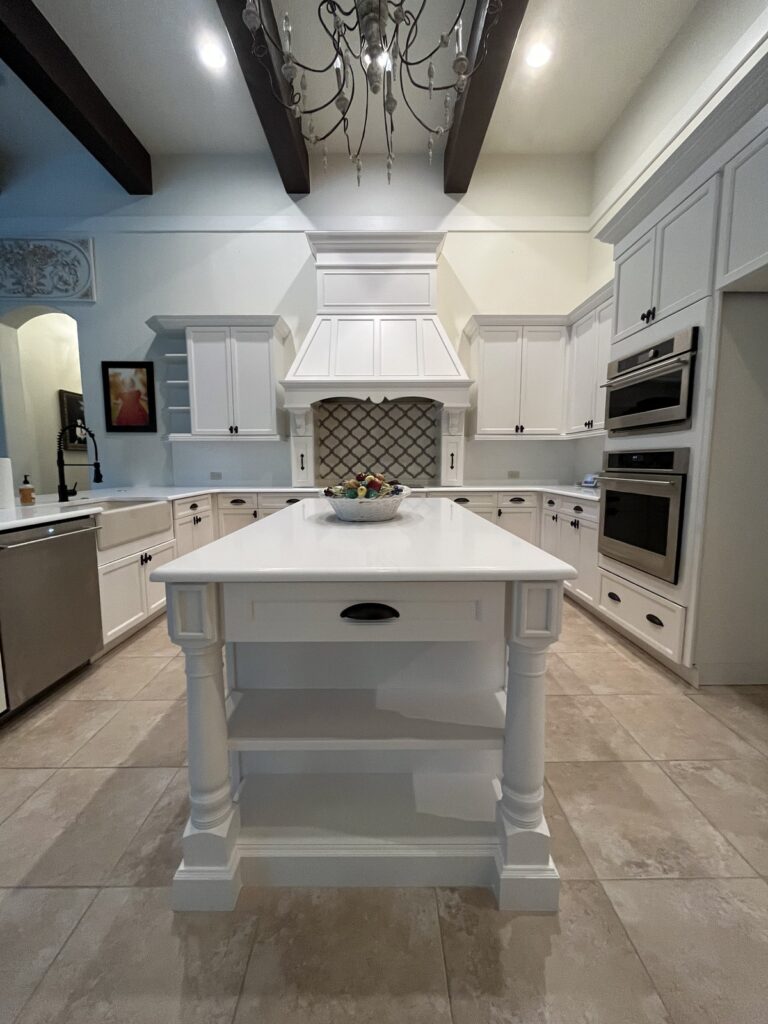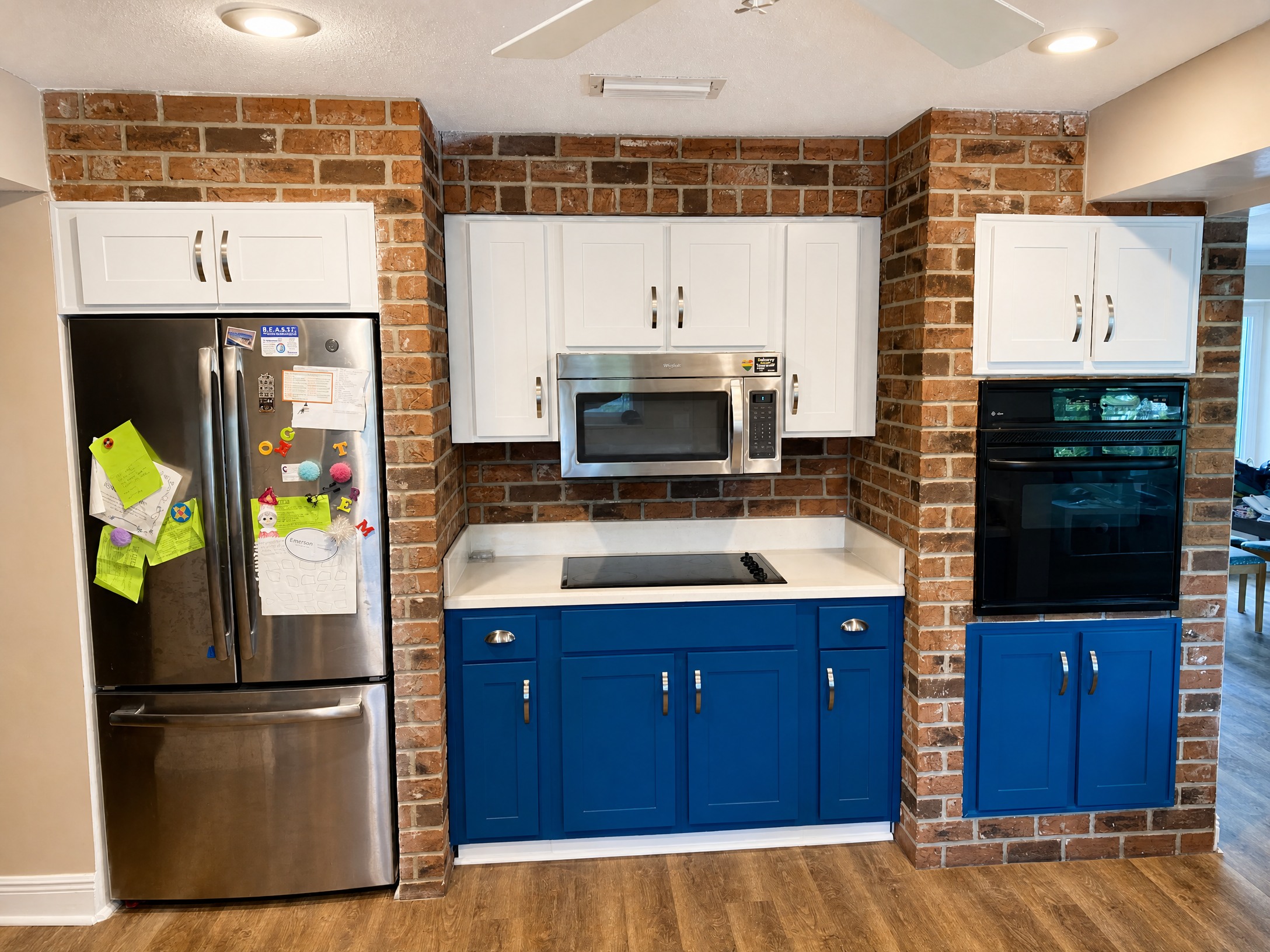
Short answer: professionally refinished cabinets commonly provide 8 to 15+ years of durable service when the refinishing process emphasizes thorough cleaning, chemical degreasing, professional spray application, and full coating curing. Those steps — more than color or a single topcoat — determine how well cabinets withstand daily wear in high-traffic kitchen zones.
Why the lifespan of cabinet refinishing varies
Cabinet refinishing is not a single product; it’s a sequence of surface repairs, cleaning, adhesion prep, and coatings. Small differences in any of those steps change how long the finish resists chips, stains, and wear. Use patterns also matter: a family that cooks and eats in the kitchen every day will put more mechanical and chemical stress on cabinet faces and pulls than a lightly used secondary kitchen.
Local factors also play a role. In Tampa Bay’s humid climate, curing times and adhesion can be affected by moisture and temperature. That’s why controlled application and adequate drying — not just the brand of paint — are central to longevity.
Primary factors that set long-term performance for cabinet refinishing
Below are the practical elements that most directly decide whether a professional refinish lasts closer to eight years or well beyond fifteen.
1. Rigorous cleaning and chemical degreasing
Surface contaminants — grease, cooking oils, silicone residue, and old polish — block adhesion. Effective professional refinishing begins with aggressive cleaning and chemical degreasing targeted at removing oils and residues without damaging the substrate. If oils remain, even premium coatings can peel or blister within months of heavy use.
2. Proper surface preparation and repairs
Preparation addresses scratches, loose veneer, and hinge or drawer issues before any coating goes on. Bonding primers and filling techniques restore a consistent surface so the coating wears uniformly. Skipping this step leaves weak spots that fail under repeated opening, closing, and cleaning.
3. Professional spray application
Spray systems produce a thinner, more even film than rollers or brushes, reducing orange-peel texture and pooling. A uniform application minimizes stress concentrations where chips and flaking often begin. Professional spray application also allows for fast, even layers that bond well to primed surfaces.
4. Controlled coating curing
Many modern coatings continue to harden well after they feel dry to the touch. Proper curing — controlled temperature, humidity, and time between handling — lets the finish cross-link fully. In humid environments, longer cure times or climate-controlled conditions are important to reach the hard, durable film that stands up to everyday scuffs and cleaners.
5. Quality of the topcoat and film build
A single thin topcoat won’t perform the same as a system of primer, mid-coat, and a well-applied protective topcoat with the right film thickness. A robust film resists staining and abrasion; combined with proper curing, it’s the physical barrier that protects the substrate beneath.
What “8 to 15+ years” really means for homeowners
When you read a general lifespan range, think of it as a performance window influenced by the factors above and by use. Expect this:
- 8–10 years: Typical if the project used solid preparation but faces daily heavy use, frequent cleaning with harsh cleaners, or minimal cure time.
- 10–15 years: Likely with thorough degreasing, professional spray application, multiple proper coats, and careful curing—plus routine, gentle cleaning.
- 15+ years: Achievable where exceptional prep and application are paired with light-to-moderate use and attentive care. Occasional touch-ups can extend this further.
These ranges are about the structural durability of the finish and how it holds up to wear and cleaning. For ongoing surface protection and day-to-day cleaning advice, dedicated maintenance articles cover those topics in depth.
How refinishing performance differs from replacement
Refinishing conserves the existing cabinet boxes and structure while renewing visible faces. It assumes the underlying cabinet boxes and hardware are sound. If doors are warped, box joints are failing, or drawers bind, refinishing may improve appearance but not the mechanical function. When assessing whether to refinish or replace, a licensed contractor’s inspection will highlight hidden structural issues that affect long-term outcome — a topic that’s useful to review when comparing overall project value and contractor selection.
For a broader look at remodeling decisions and why professional assessment matters, see this article on licensed contractors and remodeling value.
Realistic signs a professional refinish is performing well (and when it isn’t)
- Performing well: Even surface sheen across doors and drawers, no edge lifting, and resistance to mild household cleaners.
- Early warning signs of failure: localized peeling at high-contact edges, microchipping near hardware, or tackiness that indicates incomplete curing.
- What to do: Small chips and edge wear are often repairable without full redo; prompt touch-up after identifying weak spots keeps the system in a longer service window.
Smart choices to extend the life of a refinish
- Use mild cleaners and avoid abrasive pads on cabinet faces.
- Install protective elements where hands and elbows frequently contact surfaces — for example, a durable pull or a small bumper on cabinet edges.
- Allow full curing before heavy use. If a project is done during humid periods, ask the team about extended cure intervals or climate controls.
- Address hardware looseness quickly; movement at hinges stresses the finish and substrate junctions.
For guidance on color choices that pair well with durable topcoats and kitchen palettes, you may find inspiration in our feature Color of the Month: Snowbound, which discusses tone and finish considerations that relate to visible wear over time.
When to consider replacement instead of refinishing
Refinishing is a longevity upgrade for sound cabinets. Consider replacement when cabinets have widespread structural decay, severe water damage, or when you need a layout change that refinishing cannot achieve. A careful inspection will identify whether the extra lifespan from refinishing is the right investment for your home.
FAQ
How often will refinished cabinets need touch-ups?
Minor touch-ups depend on use patterns. In active kitchens, expect isolated repairs or touch-ups every few years. Proper initial prep and curing reduce frequency; addressing small issues early prevents larger failures.
Can environmental humidity shorten the lifespan of a refinish?
Yes. High humidity during application or early curing can affect adhesion and final film hardness. Professionals mitigate this with timing, controlled environments, and coating choices designed for local conditions.
Is a professional spray system worth the cost compared with brushing or rolling?
For consistent, long-lasting film build and fewer texture defects, professional spray application is generally superior. It produces a uniform coating that resists wear more effectively than brush or roller finishes, especially in high-traffic kitchens.
Closing thoughts and next step
If extending the life of your existing cabinets is a priority, the difference between a finish that lasts 5 years and one that lasts 15+ years usually comes down to preparation, professional spray application, and proper curing. If you’d like an on-site assessment to determine whether refinishing is the best path for your cabinets and how to maximize lifespan, schedule a Free Consultation for cabinet refinishing and we’ll outline the approach that matches your home’s use and environment.